Tucked away along a little track in the historic village of Eyam lies a stone cottage that seems to belong to another age. Follow the stone path though an old country garden that looks like it stepped out of a story book, and a wooden arch draped in climbing Ivy welcomes you to an ancient wooden door.
Welcome to Ivy Cottage Vintage Tearooms, a little hideaway where time seems to soften around the edges, china teacups await their next pot of tea, and the blooming garden invites you to forget the hurry of the outside world.
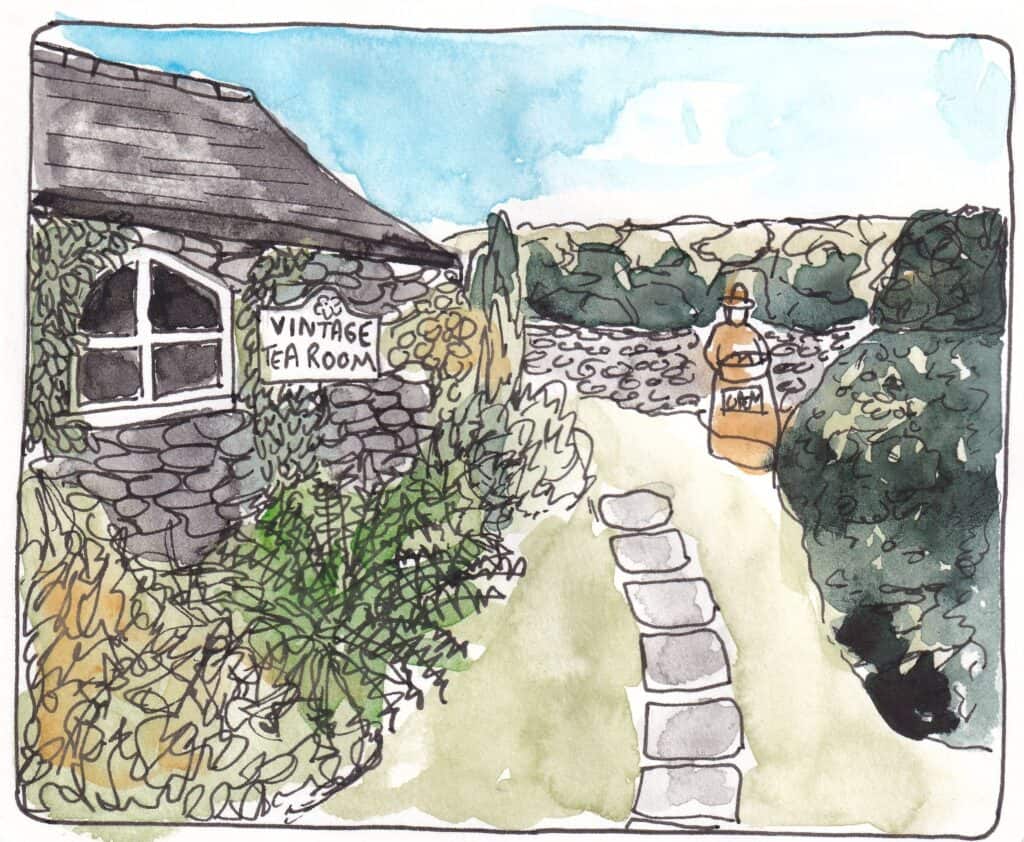
A Cottage With Centuries of Stories
Built around 1650, Ivy Cottage has stood for more than 350 years. Its stone walls were already part of Eyam when the village faced one of the most remarkable and tragic episodes in English history.
In 1665, plague arrived in Eyam, bringing a tragedy that would forever shape the village’s history. As the disease spread, the villagers made the extraordinarily brave decision to isolate themselves, determined to prevent the plaque from reaching neighbouring communities. Families were devastated, familiar streets fell quiet, and the rhythms of village life were changed beyond recognition.
It is easy to imagine Ivy Cottage standing through those terrible months, its stone walls quietly enduring as tragedy unfolded around the village. Outside, the seasons continued their slow procession, even as familiar lives and routines were shattered. In time, the plague passed, survivors began to rebuild their lives, and Eyam gradually found its way towards a bright future that could scarcely have been imagined during those darkest days.
Over the centuries, the village continued to grow around its memories, carrying its remarkable story from one generation to the next. Ivy Cottage remained among its historic buildings, part of a landscape shaped by centuries of village life.
Today, the cottage welcomes visitors to its extraordinary tearooms. There is something really moving about sitting here with a pot of tea, surrounded by greenery, in a place so closely connected to Eyam’s long history. The cottage that belong to this village’s past now provide the setting for an altogether different kind of afternoon, filled with conversation, homemade cake and the quiet pleasure of having nowhere else you need to be.
A Garden From Another Time
The path winds into a garden where nature seems to have been quietly reclaiming the cottage for centuries. Ivy threads its way across weathered stone, leaves spill over ancient walls, and flowers appear along the cottage walls as though they have always belonged there.
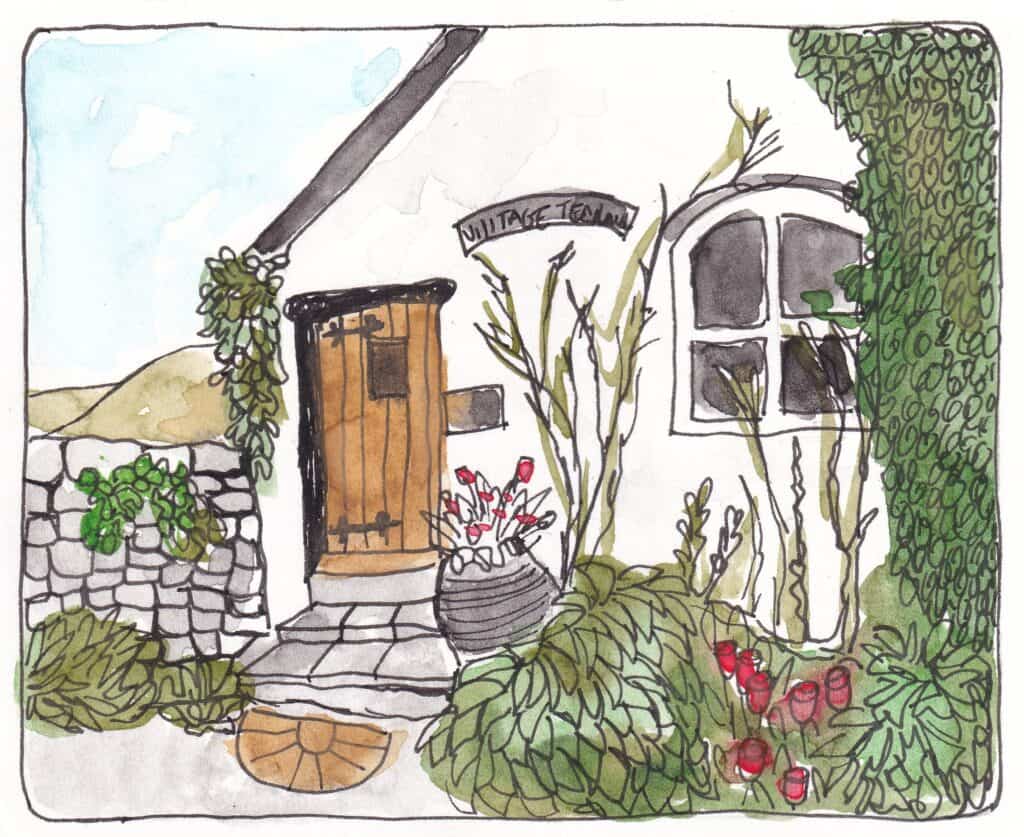
Ornate white cast-iron tables and chairs nestle among the flowers and bushes in the garden inviting you to settle beside the foliage. Follow the path and the cottage reveals itself through the greenery, its old stonework and ivy clad doorway giving it the feeling of somewhere magical to be discovered. For a moment, the modern world seems to disappear. You could almost imagine that the garden has been waiting quietly, ready to be found by someone who happened to take the right little track.
The garden seems content to carry on at its own unhurried pace. Leaves stir overhead, flowers grow among the stonework, and the outside world feels a little further away with every step.
It is the sort of place that makes you want to linger, perhaps choosing a table among the greenery and allowing the afternoon to unfold.
China, Cake and a Proper Pot of Tea
Inside, every detail transports you to another time. White teacups, saucers and delicate plates are decorated with winding ivy leaves, as though the garden has found its way onto the table. An old fire and a stained glass window shows a sleepy village scene. Shiny metal teapots catch the light, adding another touch of old world charm.
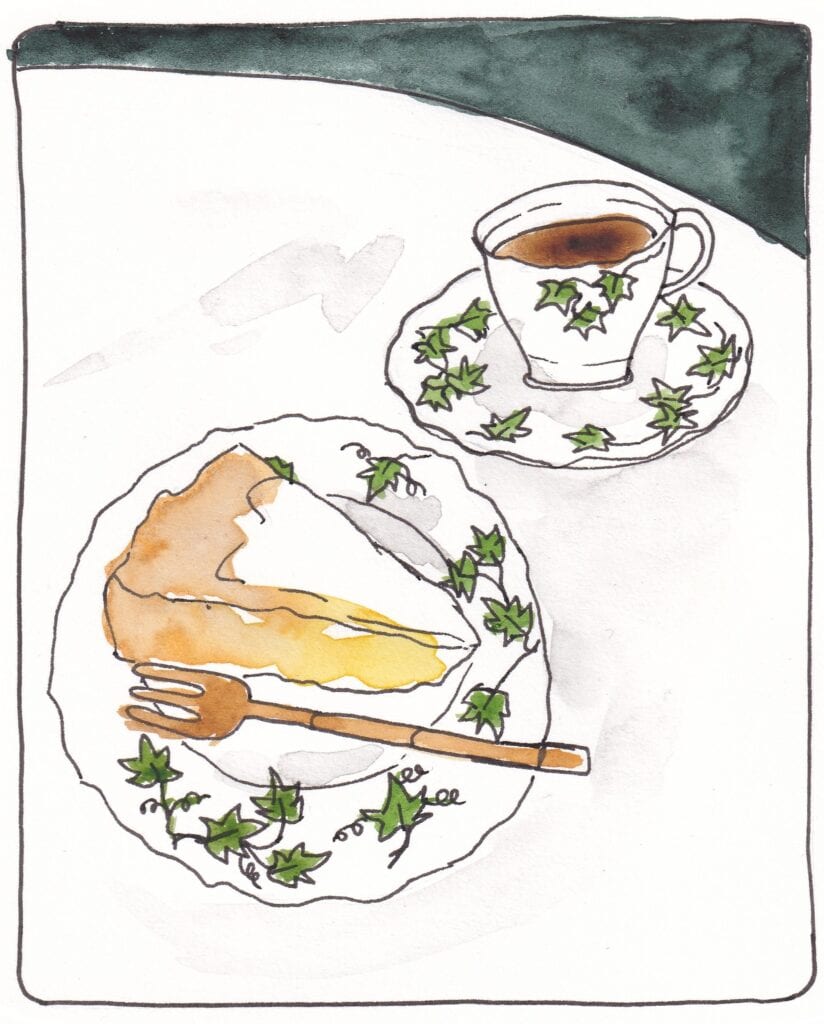
And then, of course, there is the food.
Ivy Cottage is known for its homemade soup and homemade scones, with home cooked treats adding to the feeling that everything here has been prepared with care. Depending on what’s available, you might find a slice of homemade apple and blackberry pie or a tempting piece of chocolate cake waiting to be chosen.
There is a particular pleasure in eating something homemade in a place like this. Nothing needs to be hurried. The teapot can be refilled, the cake savoured, and the conversation allowed to wander.
Everything feels thoughtful and personal, served with the sort of pride that turns an afternoon treat into something memorable.
A Little Hideaway in Eyam
Perhaps it is the age of the cottage, the winding garden path or the ivy-covered doorway that makes Ivy Cottage feel so different from an ordinary tearoom. Perhaps it is the way all these little details come together, creating a place that feels quietly removed from the world beyond its garden walls.
Eyam is a village where the past has never entirely loosened its hold. Its lanes and ancient buildings carry stories stretching back through the centuries, and Ivy Cottage is part of that living history. Yet here, history doesn’t demand your attention. It simply forms the backdrop to an afternoon spent among the old country garden, with a pot of tea, a slice of homemade cake and the soft murmur of conversation.
So follow the little track, pass beneath the ivy-covered arch and let the tearooms draw you in.
Stay for another cup of tea. Watch the leaves stir above the old stone walls. Notice the little details that might otherwise have passed you by.
And when the time comes to leave, you may find yourself looking back at the cottage, already wishing you could keep a little piece of it with you.
Some places are lovely to visit. Others feel as though you’ve stepped through a hidden doorway into a quieter, more enchanting world.
Ivy Cottage is one of those places. And for a little while, that world can be yours.
For opening times and details before your visit, please check Ivy Cottage Vintage Tearooms’ website.